 MIA
Why position matters
In labour, your baby turns and moves down through your pelvis. Being upright and changing position gives your pelvis room and lets gravity help.
Research shows upright positions in the first stage are linked with a shorter labour, fewer epidurals and fewer caesareans.
Positions for early labour
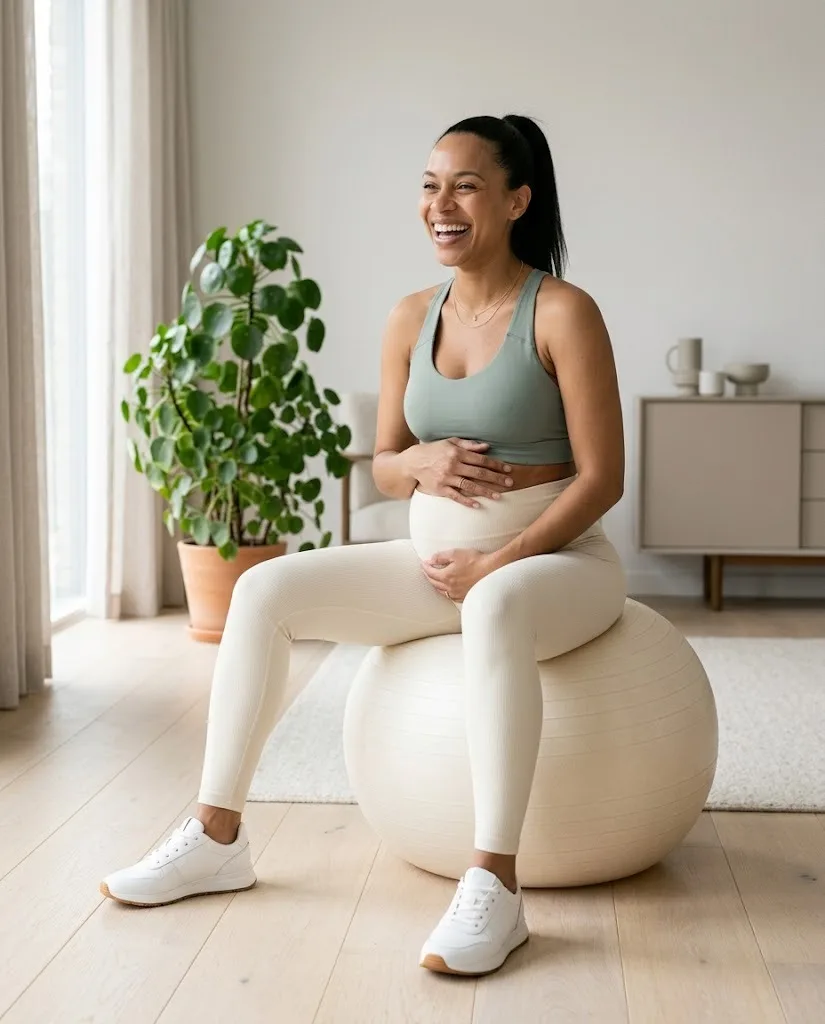
Walk, sway your hips, or lean forward on a counter or your partner. Rock or circle your hips on a birth ball.
Rest between contractions, and lie on your side when you need a break.
Positions for back pain
Kneeling on all fours, or leaning forward over a ball or bed, takes pressure off your back. It can help if your baby is lying back to back.
Ask your partner to press firmly on your lower back during contractions.
Positions for pushing
Kneeling, squatting, standing, or lying on your side can all work for pushing. Side-lying can be gentle on your perineum.
Lying on your back is common but not always needed. Ask your midwife to help you find what feels right.
With monitoring or an epidural
Many units have wireless monitors so you can still move. With an epidural, you can still change position in bed, sit up, lie on your side or use a peanut ball between your knees.
 Water birth
 Doulas